Art Nouveau emerged in the late 1800s as a reaction to the rigid historicist art of the 19th century. This new art form aimed to incorporate elements from nature such as flowers, clouds and animals with clean, flowing lines and portraiture.
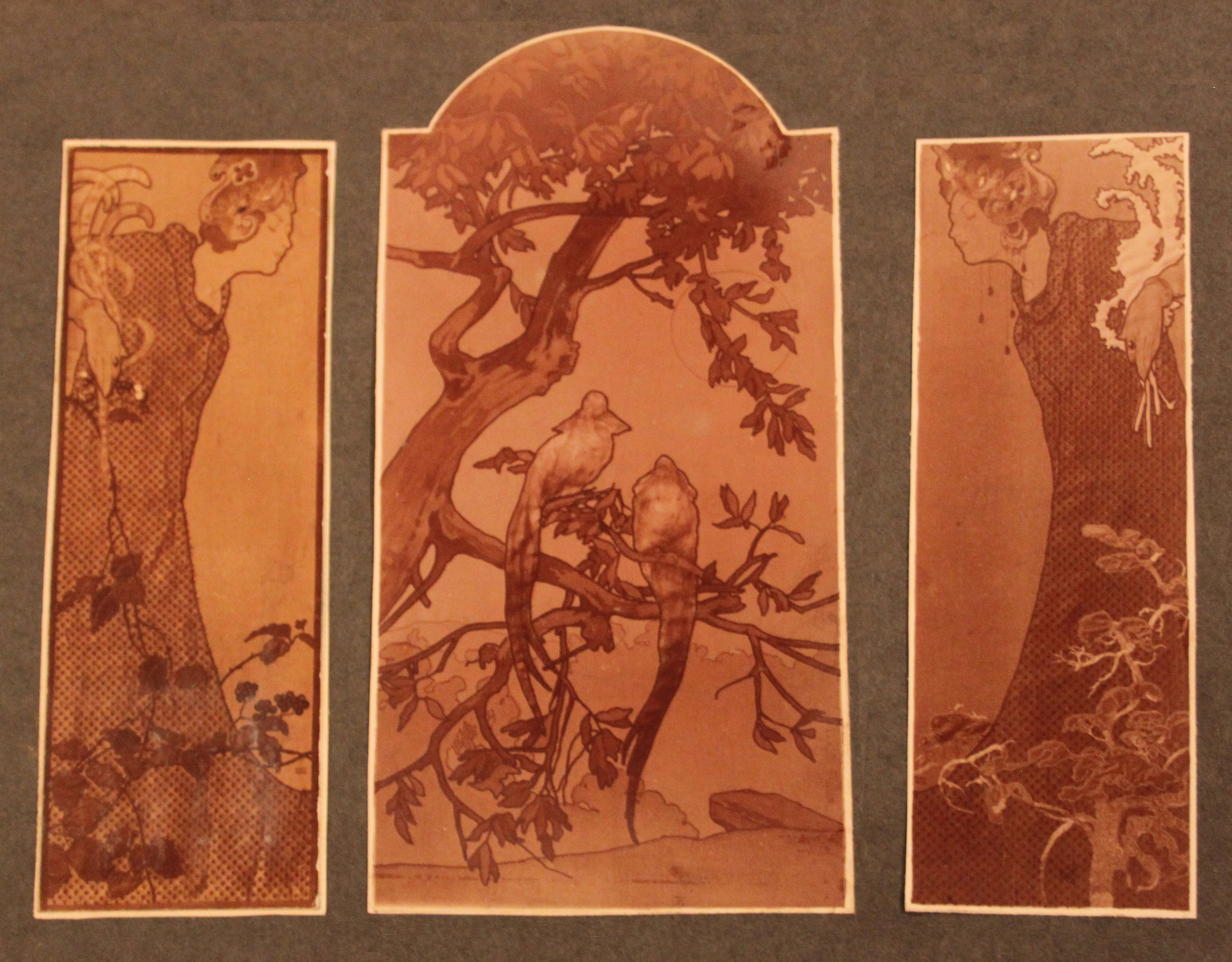
Fairy tale / application work. Árpád Basch
This stylised art movement popularised in the West by artists like Henri de Toulouse-Lautrec and Léon Bonnat (under whom Árpád studied in Paris) was the precursor to modern-day graphic design and mass print reproduction.
However, the style had already been present in Japan for almost 150 years before its emergence in Europe. Japanese artists such as Kitagawa Utamaro and Katsushika Hokusai would use large woodblocks to reproduce their aesthetic designs.
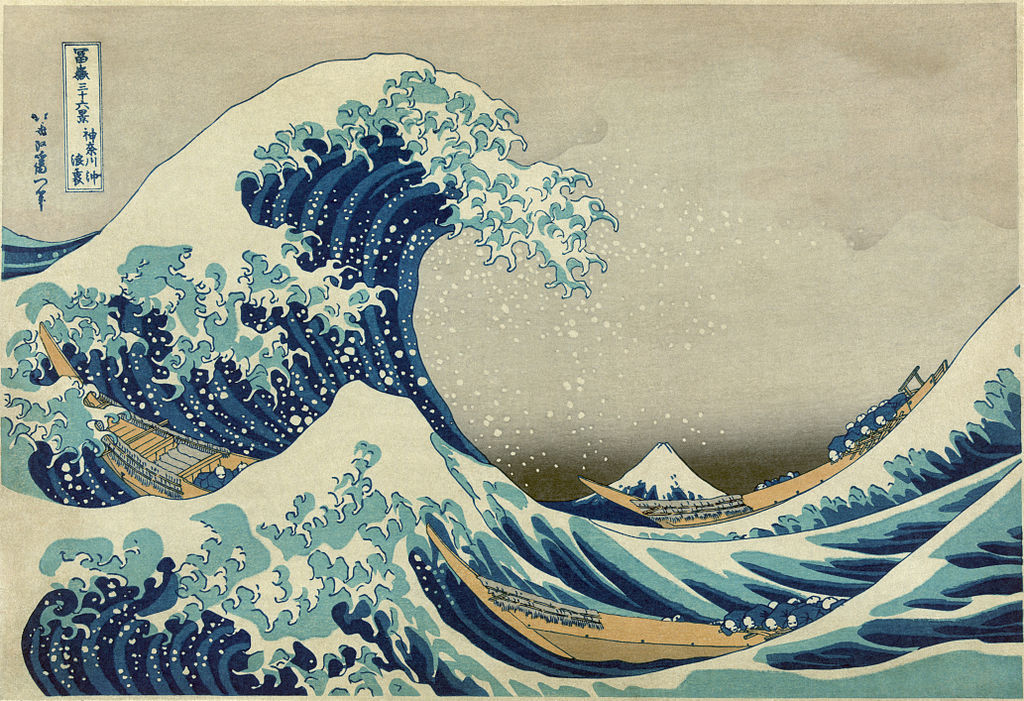
The Great Wave Off Kanagawa.
Woodblock print by Hokusai (1830)
The artistic endeavour was later commercialised and used to create posters, advertisements and postcards. The emphasis was on innovating original, eye-catching designs with flowing curves and bold, contrasting outlines.
This style (termed “Japonisme” by the French) is what influenced the sculpture, architecture, philosophy and art of impressionists in the late 19th century.
 basch art